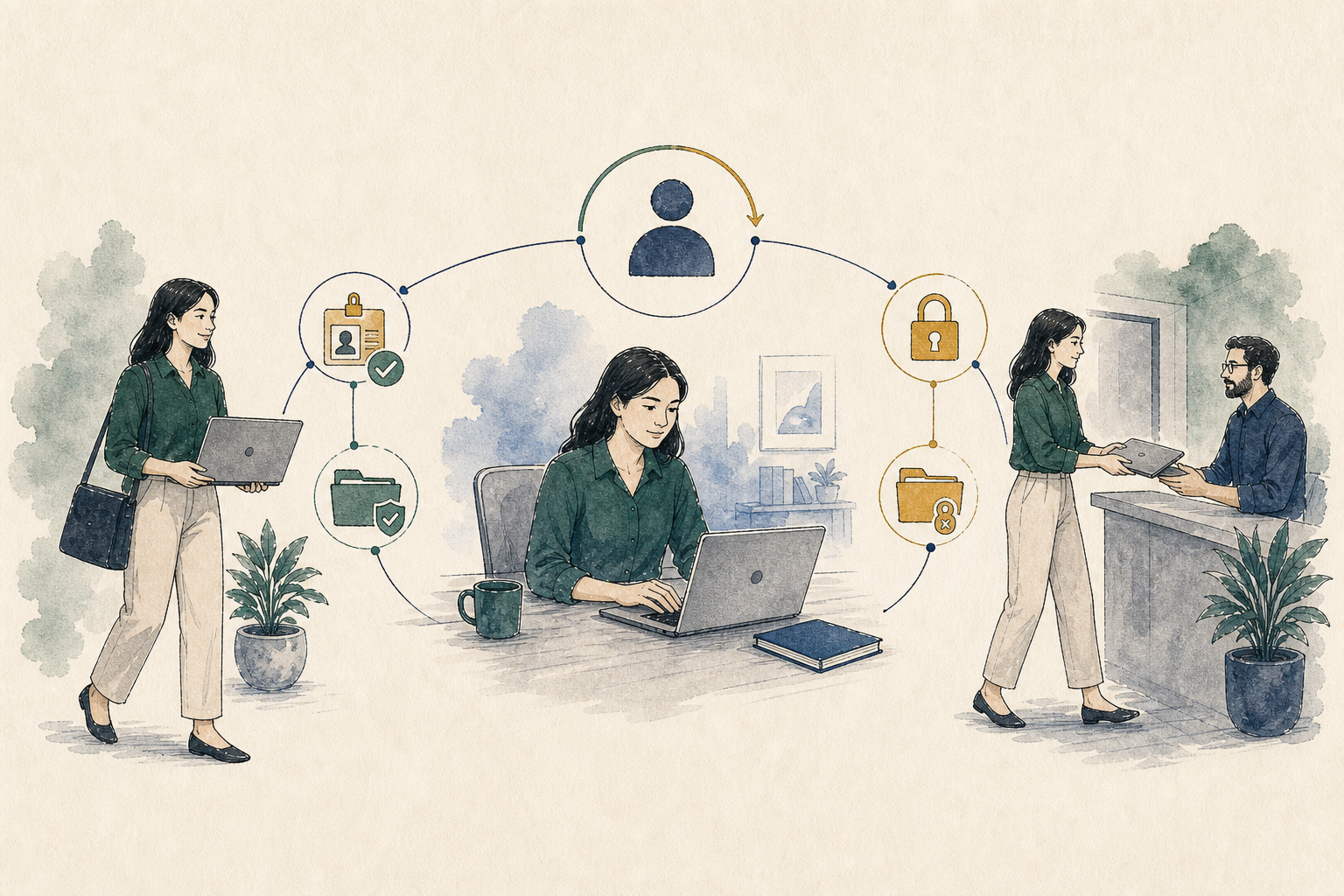
Access starts before the first day
A new worker needs more than a username. They may need a laptop or mobile device, application access, security settings, client-facing tools, internal documentation, and a clear support route. If these items are requested separately, readiness becomes difficult to see.
A useful onboarding workflow groups these items by role. It shows what must happen before the start date, what can happen on the first day, and which approvals are required.
The device is part of the process
Endpoint readiness matters because the device is where policy meets daily work. A device may need enrollment, approved applications, configuration, monitoring, support access, and return instructions. These steps should not sit outside the operating model.
When device readiness is tracked with the user lifecycle, operations teams can see which people are fully ready, which devices need attention, and where support is required.
Offboarding should not depend on memory
Offboarding is sensitive because it combines people, data, devices, and access. It should not rely on someone remembering every tool a person used. The system should already know the access path, device status, vendor involvement, and handoff requirements.
A secure offboarding workflow confirms access removal, device return or reset, ownership transfer, vendor notification where relevant, and completion records.
Lifecycle thinking reduces operational risk
When onboarding and offboarding are connected, the team can manage change more confidently. Role changes, contractor extensions, temporary access, and client-site assignments become easier to review because the operating system already has a structure for access and accountability.