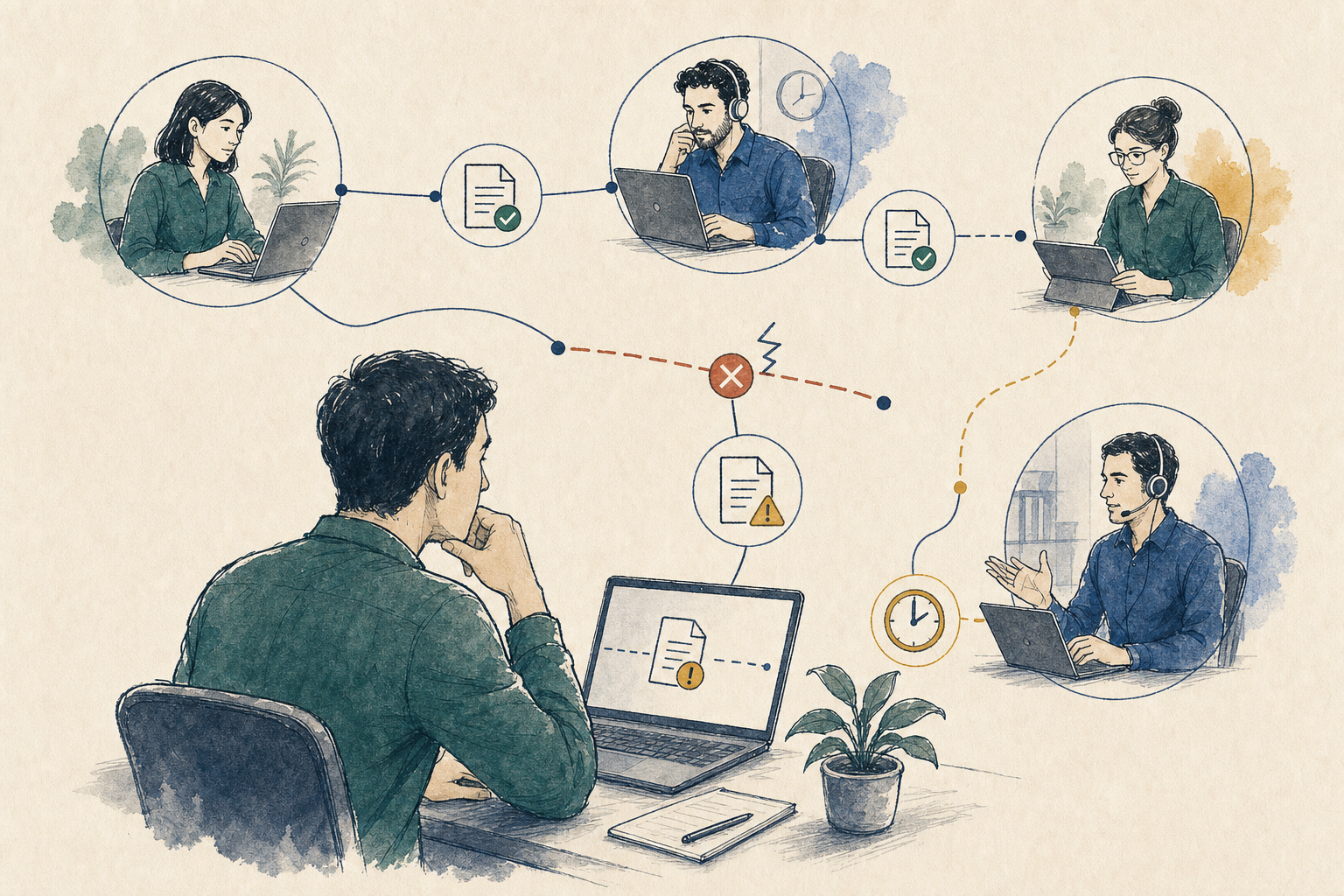
The pattern is usually operational, not technical
When a workflow breaks, the first reaction is often to look for a tool problem. The tool may be involved, but the deeper cause is usually operational. The team has not agreed who owns the task, what counts as complete, where status is recorded, or how exceptions are escalated.
Distributed work makes this harder because the missing context is not visible. People are working in different places, across different schedules, and often through different systems. Without a shared routine, the workflow depends on memory and individual effort.
Access delays create delivery delays
Access is one of the most common sources of friction. A person can be assigned to work before their device is ready, before the right application permissions exist, or before a manager knows which approvals are required. The result is avoidable waiting time and informal workarounds.
A better approach is to treat access as part of the workflow design. The onboarding path should state which tools are needed, who approves them, which device is used, and how readiness is confirmed.
Handoffs need a visible owner
The most fragile point in many workflows is the handoff between teams. A task moves from operations to a vendor, from a client-facing team to internal support, or from onboarding to service delivery. Unless the ownership transfer is explicit, the task can sit between teams without anyone being accountable.
Strong handoffs use simple rules: one owner at a time, one place for status, a named next action, and an escalation path when the next action is blocked.
Control comes from routine
The goal is not to add bureaucracy. The goal is to make the normal path clear enough that exceptions are easy to identify. Teams need repeatable routines for onboarding, access changes, vendor requests, device readiness, issue reporting, and offboarding.
Once those routines are visible, operations teams can see where work is slowing down, which tasks are waiting for approval, and which dependencies need attention before they affect service delivery.